
Understanding Diabetes Stigma
Diabetes stigma is real, and it hurts.

Diabetes stigma is real, and it hurts.
These misconceptions have real consequences, but knowing the facts can change the conversation. Diabetes is not caused by one food, behaviour or personal failing. It does not automatically limit what someone can achieve at work or in life.

Stigma can appear in everyday conversations and in health care, schools, workplaces, communities and public policy.
For many people living with diabetes, stigma is not just something they encounter. It can shape how safe they feel asking for help, talking about their condition and accessing care.
Nearly 90% of people living with type 1 diabetes and nearly 70% of people living with type 2 diabetes experience shame and blame for having diabetes.**
Its causes are complex and may include genes, family history, ethnic background, environmental influences and lifestyle factors. Regardless of type or cause, everyone living with diabetes deserves dignity, understanding and access to support.
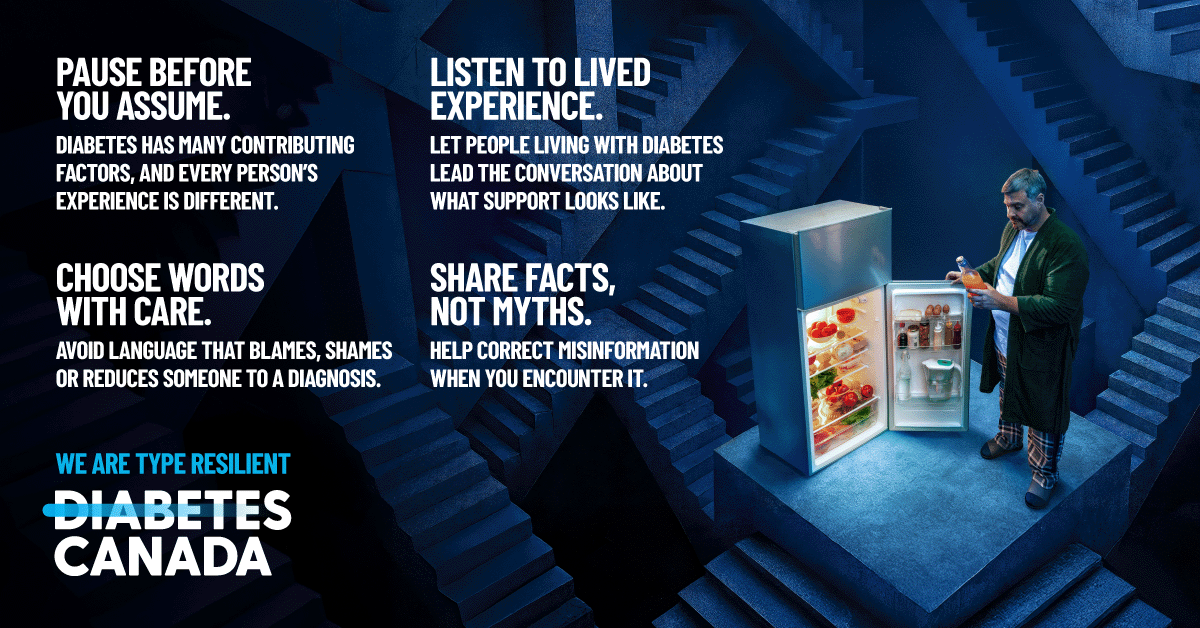
Pause before you assume. Diabetes has many contributing factors, and every person’s experience is different.
Listen to lived experience. Let people living with diabetes lead the conversation about what support looks like.
Choose words with care. Avoid language that blames, shames or reduces someone to a diagnosis.
Share facts, not myths. Help correct misinformation when you encounter it.
Learning is a powerful first step. Download and share resources that can help you recognize diabetes stigma, challenge misinformation and support better conversations in your community.
Hear from people across Canada about how diabetes stigma affects everyday life and how understanding and support can make a difference. Explore their stories to see beyond the myths and learn from lived experience.

Diagnosed with type 1 diabetes at 25, the actress, comedian and influencer is challenging stigma, making medical devices visible and speaking openly about the harder days.

Geetika Bhardwaj has navigated three different diabetes diagnoses – gestational diabetes, prediabetes and type 2 diabetes – and throughout her experiences, she has heard all kinds of comments:

A Calgary research team is putting lived experience at the centre of diabetes care and finding new ways to tackle stigma, improve access to care and change how diabetes research is conducted.

Ashley Keenan's question was simple: if our understanding of type 2 diabetes has evolved, why does so much shame still surround it?











*Source: 2025 Nanos poll conducted for Diabetes Canada, released October 2025.
**Source: The Social Experiences of Living with Diabetes in Canada report, 2024.