
Protein is an important part of a healthy diet.
Protein’s role in the body is to build and repair cells which is important for growth, muscle-building, and skin-healing. For those living with diabetes, maintaining muscle mass and protecting skin health have increased importance.
Getting enough protein helps build and maintain muscles and helps skin heal.
How does protein affect my blood sugar?
Adding protein to your meals and snacks can help manage your blood sugar. Protein slows the digestion and rate of release of the carbohydrates you eat. This means that a mixed meal containing protein and carbohydrates will have a lower effect on blood sugar than a meal without protein.
Proteins like chicken, nuts and fish are very low in carbohydrates and so do not affect your blood sugar. Other proteins such as dairy products, beans and lentils contain carbohydrates which can increase blood sugar. All are good sources of protein to include in your healthy eating plan.
How much protein do I actually need?
It is recommended for most adults 18 years of age and older to include a minimum of 0.8 grams (g) of protein per kilogram (kg) of body weight. This number will go up based on lifestage, health goals and activity levels. For reference, a 3 oz portion of cooked chicken provides 25g of protein. Protein intake goals should be individualized based on a person’s current eating pattern, preferences, existing health conditions and weight goals. To understand if your needs vary from the recommended, speak to your healthcare provider.
To calculate protein needs:

An adult weighing 150 lbs and requiring 0.8 g/kg protein, would need about 55 g protein each day. Once your individual protein need (protein grams/kilograms) is determined, you can substitute that number for the area where 0.8 is included in the calculation.
Plan your meals based on Canada’s Food Guide
Diabetes Canada recommends following Canada’s Food Guide recommendations for balanced meals. This means protein should be 1/4 of your plate. Canada’s Food Guide also recommends including a variety of proteins and choosing plant-based proteins more often because of their high fibre and healthy fats.
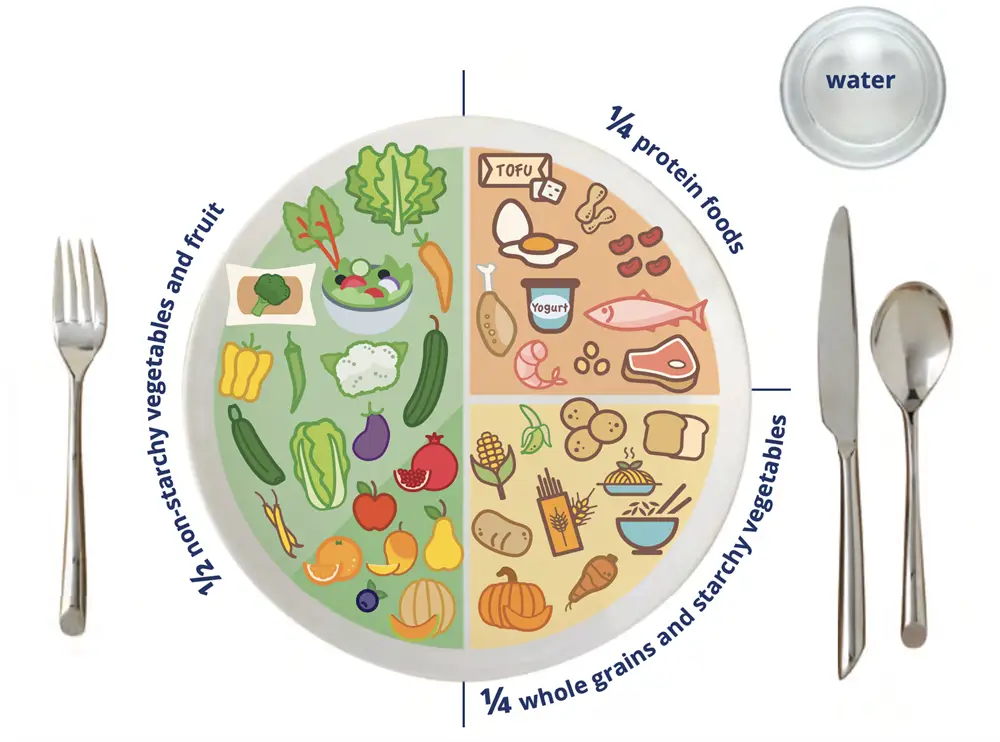
Sources of protein to fill ¼ of your plate
Including a wide variety of protein in your meal planning is key. A variety of protein sources helps you meet your needs for nutrients like iron, zinc, vitamin B12 and calcium. Portion size varies depending on protein type.
Plant-Based Proteins:
- contain healthy fats and are high in fibre, some contain carbohydrates
- sources: beans such as black beans or chickpeas, edamame, tofu, nuts, seeds, nut butters
Fish & Shellfish:
- try to include twice a week for healthy omega-3 fats
- sources: salmon, tuna, trout, cod, clams, shrimp, sardines
Lean Meat & Poultry:
- remove skin from chicken and look for leaner cuts of red meat with less fat and marbling to reduce saturated fat
- sources: chicken breast, pork tenderloin, extra lean ground beef, sirloin, flank steak
Cheese, Dairy & Eggs:
- choose lower fat options, contain carbohydrates
- sources: <2% milk and yogurt, lower fat cheese or cottage cheese, whole eggs or egg whites
Making Lean Protein Choices
- Lean protein is protein that is lower in saturated fat and calories
- Lean protein sources help you meet your protein intake without raising your cholesterol levels
- Sources of lean protein include skinless chicken breast, extra lean ground beef, pork tenderloin and fish like cod
- Plant-based proteins such as legumes, soy and nuts are naturally lean sources of protein
Visit www.diabetes.ca for more healthy eating tips and recipes!
Protein value of some common foods*
| Food Item | Serving Size | Protein Content (approximate) |
| Meat, fish or poultry cooked | 90 g/3 oz cooked or 1/2 cup | 25 g |
| Pumpkin seeds, roasted | 1/4 cup (60 mL) | 17 g |
| Greek yogurt | 3/4 cup (175 mL) | 17 g |
| Cottage cheese | 1/2 cup (125 mL) | 13 g |
| Beans, peas or lentils | 3/4 cup (175 mL) | 12 g |
| Eggs | 2 | 12 g |
| Tofu | 150 g/175 mL (3/4 cup) | 12 g |
| Cheese | 50 g/1.5 oz | 12 g |
| Milk | 1 cup (250 mL) | 9 g |
| Peanut butter | 2 Tbsp (30 mL) | 8 g |
| Almonds | 1/4 cup (60 mL) | 7 g |
| Soy beverage, fortified | 1 cup (250 mL) | 7 g |
| Hummus | 1/4 cup (60 mL) | 5 g |
| *Source: Canadian Nutrient File 2023 | ||