All bodies need energy in the form of sugar called glucose. Insulin is a hormone that helps our bodies take this glucose and use it for energy. Without insulin, glucose builds up and causes high blood sugar.
Here are some basic tips to help you get started
| Tips: | Reasons: |
|---|---|
| Eat a meal or snack every 4-6 hours to ensure you are getting enough energy and nutrients. | Eating at regular times helps manage blood sugar levels. |
| Eat more high-fibre foods such as whole grains, breads and cereals made with whole grains, beans, peas, lentils, vegetables and fruit. | Foods high in fibre will keep you full longer, lower the impact of carbohydrates on your blood sugar and support overall health. |
| Eat a balanced breakfast that includes both carbohydrates and protein. | Helps to prevent blood sugar highs and lows |
| Prepare more meals at home. | Preparing meals gives you more control over how much sugar, salt and added fats you eat. |
| Limit sugars and sweets such as sugar sweetened drinks, desserts, candies, jam and honey. | Increased intake of sugar increases blood sugar levels. |
| Choose healthy fats such as olive, canola or vegetable oils in small quantities. | Replacing saturated fats and processed foods high in saturated fats with unsaturated fats helps reduce heart disease risk. |
| Choose water more often as your drink of choice. | Plain water has no carbohydrates or sugars and will not add to your carbohydrate intake. |
| Add physical activity to your day. | Regular aerobic and resistance exercise improves blood sugar and is good for overall well-being. |
| Limit alcohol consumption. | Alcohol can affect blood sugar levels and provides calories but no nutrients. |
Plan for healthy eating
The balanced plate approach applies to all mealtimes, even if you use a bowl! The balanced plate is designed to help you meet your nutrient needs and manage your blood sugar.
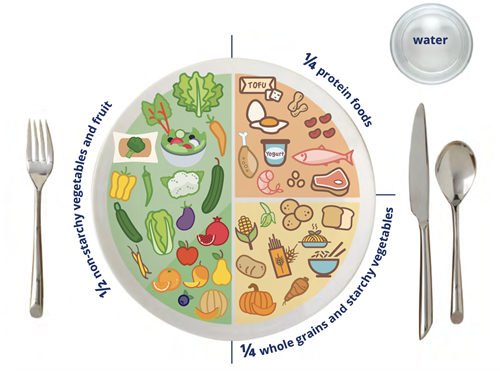
Healthy eating tips
- Eat more vegetables. They are very high in nutrients and fibre and low in carbohydrates.
- Choose lean animal proteins such as skinless chicken, pork, extra lean beef and fish. Select vegetable proteins such as tofu, edamame, beans and lentils more often.
- Select heart healthy fats such as olive oil, canola oil, vegetable oils, avocado and nuts and seeds instead of animal fats.
- Learn more about low-glycemic-index foods such as legumes, whole grains, fruits and vegetables and how to include them in your eating pattern.
- Eat together as a family more often to model healthy eating behaviours to children and teenagers.
- Consider learning about counting carbohydrates, and different types of eating patterns (e.g. Mediterranean, DASH).
- If you are planning on fasting, talk to your health-care team 1 to 2 months in advance.
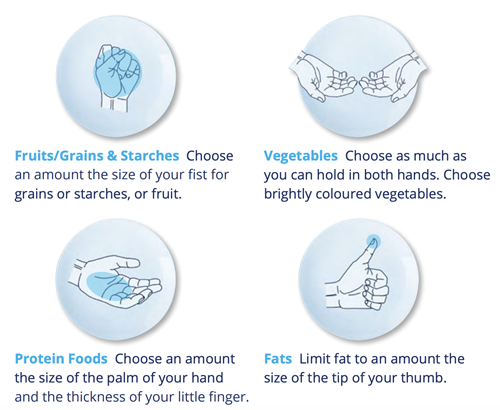
Handy portion guide
Your hands can be very useful in estimating appropriate portions. When planning a meal, use the following portion sizes as a guide:
| Sample meal plan |
|---|
Breakfast:
|
Lunch:
|
Dinner:
|
Evening Snack:
|