There are devices for checking your sugar and for giving insulin.
Checking sugar levels
Diabetes technology such as glucose (sugar) monitors and insulin pumps is becoming more essential to the day-to-day management of diabetes for many Canadians. Technology (tech) isn’t for everyone though. Before you decide whether to use it or not, talk to your healthcare team about if it’s the best choice for you.
Depending on the type of diabetes you have and if you use insulin, the type of technology you use will be different. There are devices for checking your blood sugar and for giving insulin.
Checking sugar levels
Blood sugar is the amount of sugar (glucose) in your blood. It's important to check your sugar level because it will:
- tell you if you are in your target range
- show how your lifestyle and medication affect your sugar levels
- help you and your health-care team make lifestyle, eating and medication changes to improve your sugar levels
Tech for checking sugar levels
It’s important if you live with diabetes that you try to keep your sugar within the target range set for you by your health-care team. People with diabetes who take insulin, and certain diabetes medications need to check their sugar levels at home.
-
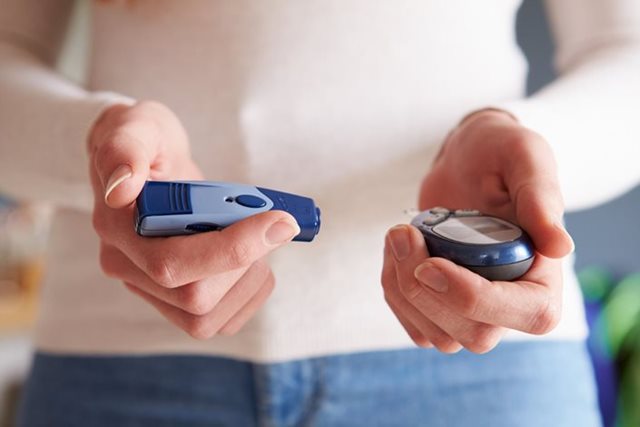
Blood sugar monitors (or meters): Blood sugar monitors test the sugar (glucose) circulating in your blood. You will use something called a lancet to prick your finger so that a blood sample can be put on a test strip that is inserted into the monitor to read your blood sugar. Monitors are available at most pharmacies or from your diabetes educator. Once you receive a monitor, make sure you get the proper training before you begin to use it.Ask your health-care provider about:
- How and where to draw blood
- How to use and dispose of lancets (the device that punctures your skin)
- The size of the drop of blood needed
- The type of blood glucose testing strips to use
- How to clean the monitor
- How to check if the monitor is accurate
- How to code your monitor to read your test strips (if needed)
- Intermittently-scanned continuous glucose monitor (isCGM): isCGMs are a type of device that use a sensor to measure sugar in fluid between cells and doesn’t require finger pricks. Instead, a sensor sits on your skin like a small, lightweight, waterproof patch. It is held in place by sticky material and has a small flexible filament that sits just underneath your skin (usually the upper arm) to measure sugar levels. The sensor is connected to your smartphone with an app so when you hold your phone over the sensor, it reads and records your sugar levels. isCGM provides sugar levels only when the sensor is scanned and not continuously.
- Real-time Continuous glucose monitors (rtCGM): rtCGMs are similar to isCCGMs but use a sensing device to continuously measure sugar in fluid between cells. It does not require a finger prick. rtCGMs let you see your sugars through a continuous display on an app on your smartphone or other device. They also provide alarms for alerting low and high sugar levels.
CGMs let you record and share the data from your smartphone with your diabetes team which means they can see your glucose trends over time. They can also suggest things to help increase time in target range – which is shown every day on your device.
Some CGMs can connect to an insulin pump, which is important if you want to use what is called a hybrid closed loop system.
Learn more about CGM technology, including costs and public plan coverage in Canada.
How blood glucose monitors (finger prick checks) differ to CGM readings
A finger prick check tells you what your blood sugar level is at that moment.
With CGMs, what’s being measured is the amount of glucose in the fluid between your cells. This is called interstitial fluid. It’s not quite as accurate as a finger prick test as it is slower to show actual blood sugar levels by up to 15 minutes.
The difference between your blood sugar level and CGM reading is more likely to be larger when you’re eating or exercising.
Even if you’re offered a CGM by your healthcare team, it’s important that you have a diabetes kit that includes a blood glucose monitor and testing strips for double checking CGM readings and as a backup in case something goes wrong with your CGM. You may need to do a finger prick check, for example, if what you’re feeling doesn’t match what your CGM reading says. Or if you’re treating low blood sugar, also known as hypoglycemia, you may want to do a finger prick check to get the most accurate result.
Taking insulin
You can take insulin in different ways including syringes, insulin pens and insulin pumps. You can choose what works best for you. Insulin pumps are the only device that uses technology to help manage insulin. Syringes and pens are still done by injection.
Today’s syringes are smaller and use thinner needles. This method of giving insulin is less costly than pens and pumps. Injections are made to be as comfortable as possible.
Insulin pens are preloaded with insulin and are easy to use and carry. They help give the right dose of insulin at your regular injection times. A needle tip is added for each injection. You will need more than one pen if you use different types of insulin, one pen for each type of insulin.
Insulin pumps are small devices that replace insulin injections. They deliver insulin continuously throughout the day and night, often in response to your blood sugar readings on your CGM or app.
They:
- are small devices that store and release insulin your body needs
- give insulin 24 hours a day through a small tube inserted under the skin
- are worn outside the body
- are often used by people who need many insulin injections each day
- can connect to CGMs and can respond by providing insulin when you need it
- can send data to health-care providers or caregivers
Insulin pumps give a continuous, small trickle of insulin delivered 24 hours a day to keep blood sugar stable between meals and overnight. Additional doses can be given ‘on demand’ to cover changes in carbohydrate intake or to correct high blood sugar.
When using a pump, it is a good idea to have a pump backup plan before one is needed. This means having backup supplies such as:
- Rapid-acting insulin pens or syringes
- Long-acting insulin (if needed)
- Extra pump supplies (infusion sets, reservoirs)
- Ketone testing strips for urine or a ketone blood monitor
Your health-care team will work with you to decide such things as:
- if an insulin pump will work for you
- your pump settings if you are giving insulin that way
- the number of insulin injections you need each day
- the timing of your insulin injections
- the amount (dose) of insulin you need each time
Related Content
Your right to access devices
It's your right to access the devices and medication you need. Learn more about our position here.
Device rights About Your right to access devices
Medication management
Learn about different medications and how they can help manage diabetes.
Medication management About Medication management
Tools & resources
Resources to help you understand, manage, and thrive while living with diabetes.
Tools & resources About Tools & resources