
STORIES
Betsy Cheng defies stereotypes
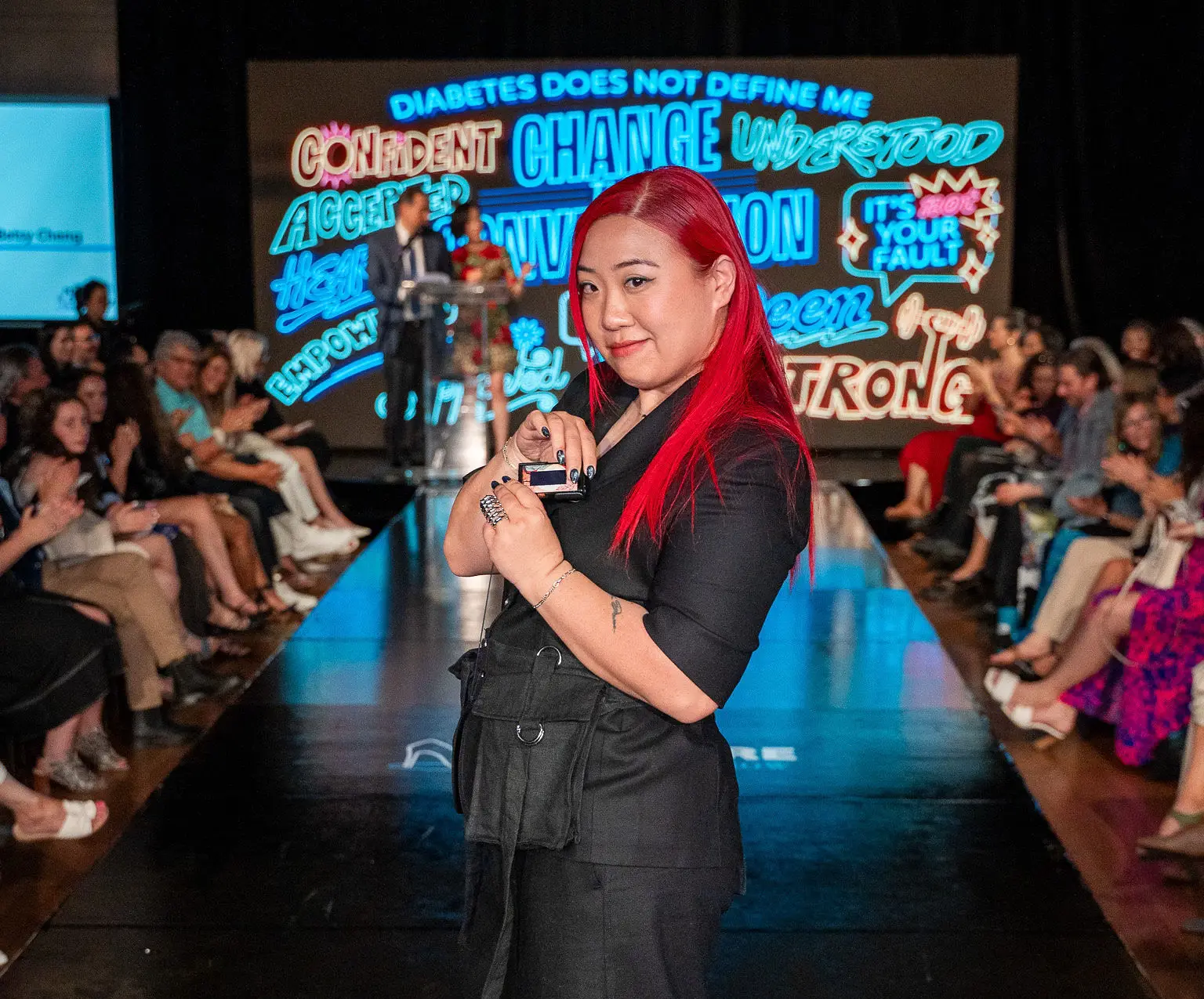
At the Toronto Pump Couture Fashion Show, model Betsy Cheng’s bright red hair and tattoos caught people’s attention. But it was her diabetes technology that she held up with pride, visible signs of the strength it takes to live with diabetes every day.
For Betsy, Pump Couture is more than a fashion show. It is a place to express herself, connect with people who understand and challenge assumptions about what living with diabetes looks like.
Because there is no single story, face, or experience of diabetes.
The beginning of her diabetes story
After experiencing weight loss and unexplained thirst, Betsy was referred to a diabetes clinic.
“You get overwhelmed with that information,” she says. “My healthcare team was trying to relay information on how I would manage this condition, but I was still stuck on step one: I have diabetes.” Betsy was diagnosed with type 2 diabetes early in adulthood. Her diagnosis was later revised to latent autoimmune diabetes in adults, known as LADA.
LADA is an autoimmune form of diabetes in which the body attacks the cells in the pancreas that produce insulin. The process may happen gradually and is often diagnosed in adulthood. In Betsy’s case, she began using insulin right away.
I wish people understood that diabetes is not just type 1 or type 2,” she says. “There is a whole spectrum of experiences of diabetes.
There are many forms of this complex condition, including LADA, gestational diabetes, maturity-onset diabetes of the young, type 3c diabetes, and cystic fibrosis-related diabetes.
People with diabetes have more than one story; they have completely different experiences even if they live with the same type of diabetes.
Sharing what people do not always see
Many people know Betsy through her social media channel, @ladadiabeticB, where she shares the realities of living with diabetes.
She started the account because she did not know other people with diabetes in her area and saw little representation of LADA online. What began as a separate space for diabetes content became something bigger: a way to find community and add her voice to it.
“When people think of diabetes, they often assume I ate too much sugar as a child,” she says.
These comments may not always be intended to cause harm, but their impact is real.
Diabetes stigma can reduce this condition to assumptions about food, weight, physical activity, or personal choices. When it is much more complex. Diabetes is caused by a multitude of factors: your family history, your ethnic background, your age and gender, your ability to access affordable and nutritious foods, your income and employment, and more.
My story may have similarities to other people’s stories, but my experience is not the same,” Betsy says. “Everyone could have the same diagnosis on paper, but how we manage this complex condition every day is different.
Betsy shares moments people may not otherwise see – waiting for a low blood glucose level to rise, changing her diabetes technology, and navigating symptoms she cannot always explain.
She does not want to present a polished version of diabetes. She wants to tell the truth.
Every day is different
In any given day, Betsy manages insulin dosing, carbohydrate counts, stress, sleep, movement, illness, weather, timing, and a long list of other factors that can affect blood glucose.
“I can do the same thing two days in a row, and my numbers will be different,” she says.
That relentlessness requires Betsy to respond, adjust, and keep moving forward.
It does not mean getting everything right. It does not mean staying positive all the time. And it does not mean diabetes should be faced alone.
No one has the same experience with diabetes, so understanding what someone is going through comes from asking questions, staying curious and listening to the person with diabetes share their own unique perspective,” says Shusmita Rashid, executive director of Change the Conversation, which aims to create an inclusive world for people with diabetes, where they feel safe to share their condition, get the care they need, and enjoy their lives fully.
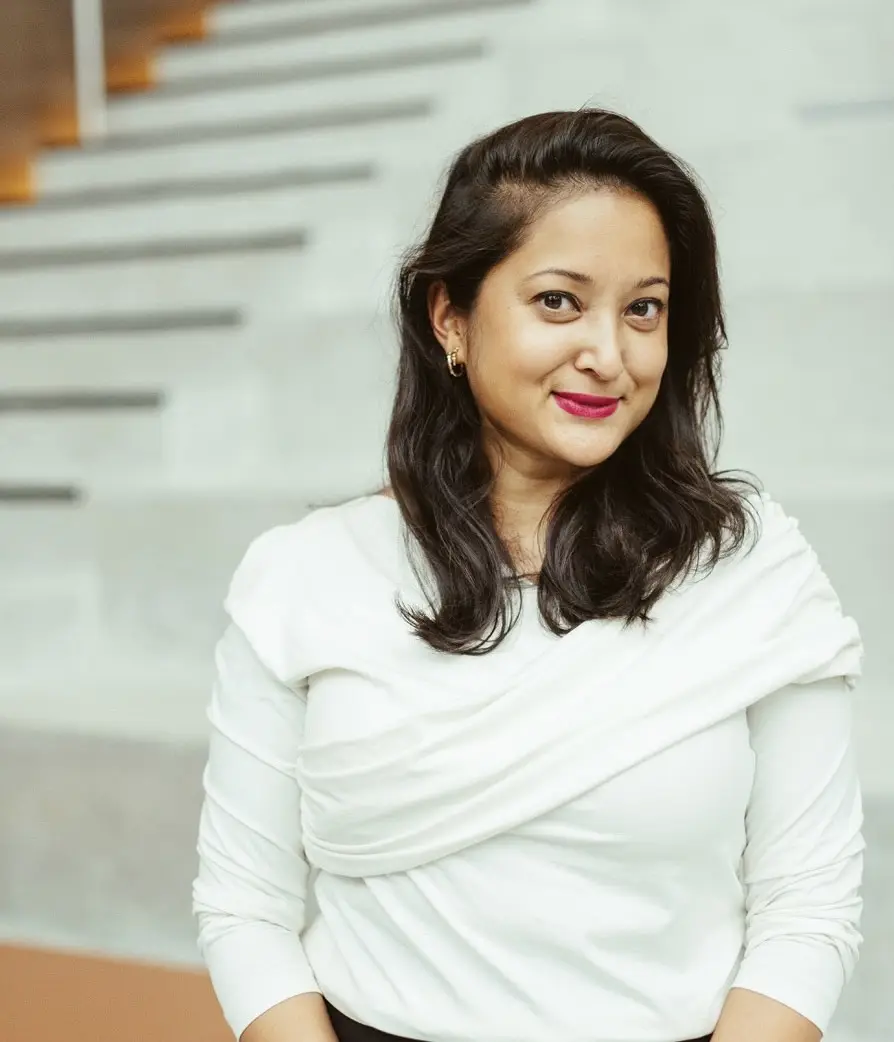
Not everyone feels safe disclosing diabetes. Judgement and misunderstanding can make it harder to talk about the condition or ask for support. Listening without making assumptions can help create spaces where people feel seen, respected, and supported.
Finding a community that understands
Betsy was nervous before her first Pump Couture Fashion Show. She arrived late after a difficult trip on public transit and kept repeating the same instruction to herself: do not trip.
But backstage, she found something she had been missing.
Models shared practical advice, compared experiences, and encouraged one another before taking the runway.
“That’s where I really saw what a community was about for people with diabetes,” Betsy says. “You would hear certain alarms or alerts, and everyone knew: okay, who is it? What do we need to do?”
When Betsy returned for her second show, it felt like she was coming home.
“It didn’t matter if you were new or if you had done it for five-plus years,” she says. “It was coming to a place of comfort and compassion.”
That sense of community continues beyond the runway. Models connect online, follow each other’s advocacy, and carry those relationships forward throughout the year.
Confidence through self-expression
At Pump Couture, fashion becomes a way for models to show who they are.
Before the event, each model describes their personal style, what makes them comfortable, and what they do not want to wear. During fittings, the stylists also consider how each person wants to show off their insulin pump or continuous glucose monitor. The stylists did not simply ask whether the clothes looked good. They also ask the model how they feel in the clothes.
“They ask: are you comfortable? Do you feel confident in your outfits? Because your confidence shines when you are wearing the right clothes.”
That approach gives models control over how they are represented. Their diabetes technology is not something to disguise. It becomes part of an honest expression of the person wearing it.
And then once the music begins, Betsy says the nervousness starts to disappear.
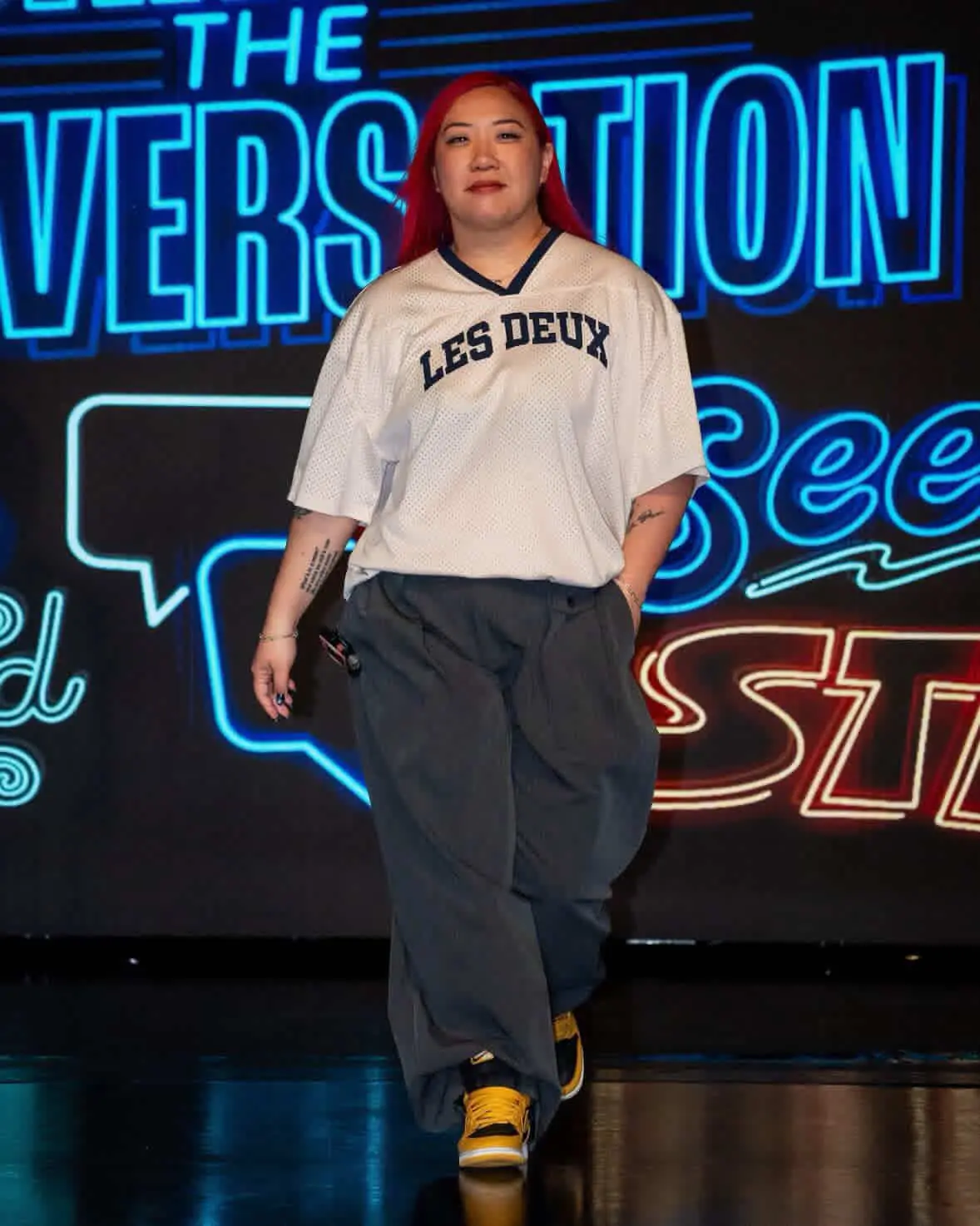
You’re just going to have fun,” she says. “People are cheering for you. They don’t even know who you are. They’re just cheering for you.
Changing what diabetes looks like
Pump Couture brings together people of different ages, styles, and diabetes experiences. Each model takes the runway as an individual, not a stereotype.
“We’re really showing that diabetes doesn’t stop us,” Betsy says.
Watching children participate is especially meaningful to her. She remembers a young model who was afraid to walk during rehearsal. The other models encouraged the child and cheered when the child stepped onto the runway.
“To know that you can take care of your diabetes at that age, you’re a hero in the making,” Betsy says. “It gives me hope that the future of our community is in good hands.”
The models make diabetes visible, but diabetes is not the only thing audiences see. They see their personal style. Creativity. Accomplishment. Community. They see people living full and individual lives.
That visibility matters.
It challenges the assumption that diabetes has one story. It can give models greater confidence to express themselves and share their experiences when they choose.
No one should feel pressured to disclose personal health information. But everyone deserves to live in a world where sharing feels safe.
Through @ladadiabeticB and Pump Couture, Betsy is helping people see diabetes more fully, replacing stereotypes with honest experiences.
“Every pump, sensor and device on that runway tells a story," She wrote. “A story of resilience, strength, adaptation and community.”
Together, their stories replace stereotypes with something stronger: their truth.