At the age of 75, Anne Bunda works with a personal trainer and attends a boot camp regularly. “It keeps my emotions and physical fitness in check,” she says.
In the more than 60 years since her diagnosis with type 1 diabetes (T1D) after an infection, Anne has seen a lot of changes. She remembers using glass syringes that her mother boiled daily and testing her urine for years until the arrival of blood testing. “I attended a one-room school with four kids in my class,” she says. “A great amount of support came from my mother and my teacher at the time.”
The next chapter
After high school, Anne attended the University of Guelph to become a registered dietitian. “This education helped me so much for my own health, and I was able to go on and help so many others. I spent 30 years working, some years in diabetes education.” By this time, she was giving herself multiple daily injections to manage her diabetes.
A few years later, Anne married, and she and her husband had three children. “I use my family and my understanding partner in life, my husband who is my rock, for emotional and psychological support,” she says. “I have friends with T1D who I also rely on.”
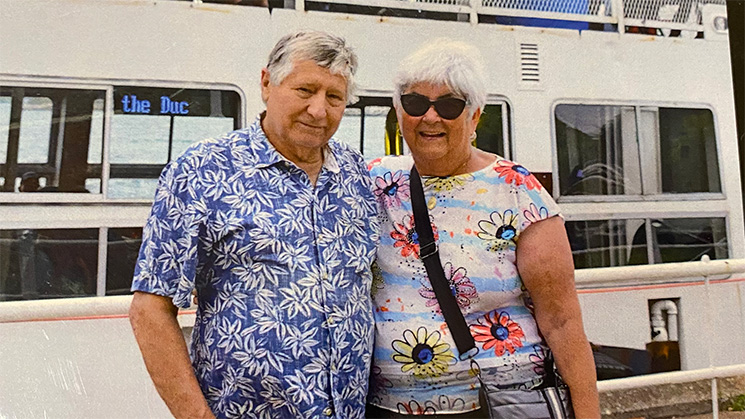
Although she hasn’t developed any complications, managing her blood sugar has been challenging at times. “Harassment over hypoglycemia [low blood sugar] was something that I had to suffer with while working,” she says. Lows can result in a range of symptoms, including difficulty concentrating, anxiety and drowsiness. Anne adds, “I didn't let it stop me from working but just worked with everyone.”
But it did result in her losing her licence three times; she hadn’t started using an insulin pump and continuous glucose monitor (CGM) yet. She recalls a low during a family camping trip. “I conquered camping in Algonquin Park with severe hypoglycemia. My husband, save his soul, gave me the glucagon [which is used to treat lows] in very poor lighting in a camper trailer, with wolves around the park at the time. It was very memorable.”
Anne has been using her pump and CGM for the past 15 years, and says,
I always know what my blood sugar is from the time I put my feet on the floor to get up. My pump and the CGM have helped me dramatically almost forget for a few days that I have diabetes.
Giving back
Anne began supporting research in the late ‘70s as a participant; first with blood sugar monitors (CGMs) when they first came on the market.
She also got involved in antibody research to find out whether her children might develop type 1. “Our middle son who is 45 years old has [lived with] type 2 for the past 15 years,” she says. “He is on a Lente Insulin and Ozempic and pills for his blood sugar. He is also a shift worker, which makes it difficult, and has a family of three young boys so is always on the go.”
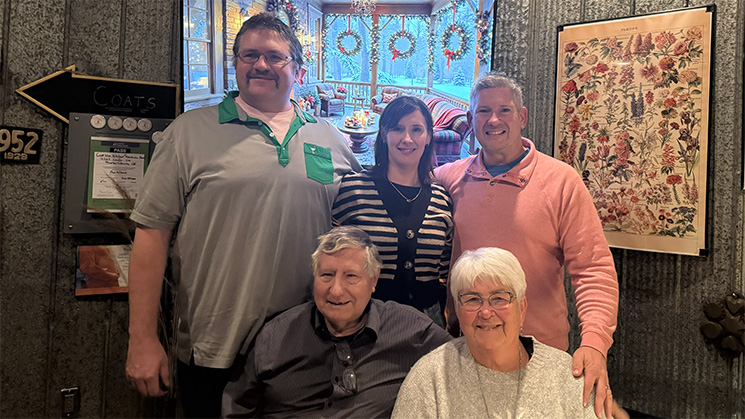
Her family also volunteered for events with her local Diabetes Canada branch, raising funds for diabetes through garage sales, walks, bike rides and barbecues.
How does she do it all? “I am just a strong-willed mother and grandmother with T1D. I take each new day as it comes along, because some days are harder to get through than others with T1D. I keep myself very busy.”
Lessons learned
Anne, who has also participated in research in Boston, says, “I do see a cure one day.” In the meantime, she is philosophical about her journey so far: “Diabetes has taught me so much: patience, discipline, empathy, compassion, responsibility, self-awareness, resilience, and taking one day at a time. You very much need to give yourself grace some days. Every day I manage diabetes is proof of my strength for the great life I lead.”
Did you know?
Since 1975, Diabetes Canada has supported outstanding diabetes research in Canada and provided more than $173 million in research grants, awards and partnerships to scientists across the country. To start off 2026, Diabetes Canada is thrilled to award almost $6 million in funding to new research projects.
Related Content

Recently diagnosed?
What you need to know about managing diabetes.
Read more About Recently diagnosed?
Complications
If left untreated or improperly managed, diabetes can result in a variety of complications.
About complications About Complications
Tools & resources
Take charge of your health with tools and resources from Diabetes Canada.
Get started About Tools & resources