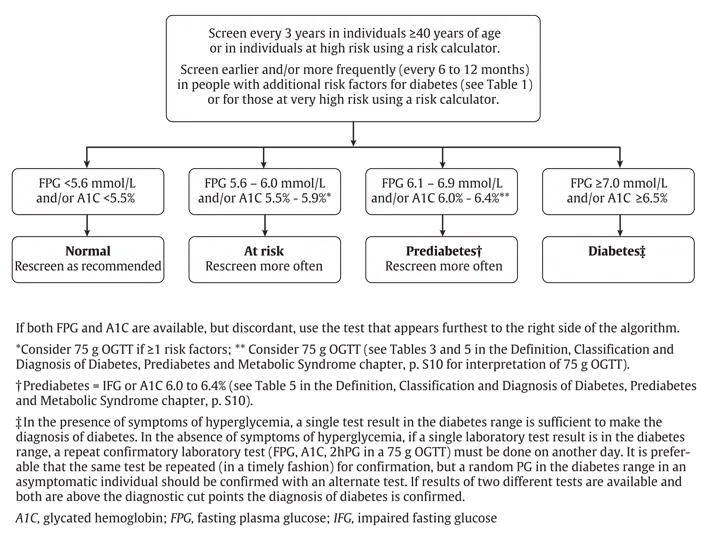

Measure Fasting Plasma Glucose (FPG) and/or A1C and enter test results:
Or
Measure 75g Oral Glucose Tolerance Test (OGTT) and enter test results:
- Screen every 3 years in individuals ≥40 years of age
- Screen every 3 years in individuals at high risk according to a risk calculator
- Screen earlier and/or more frequently (every 6 to 12 months) in people with additional risk factors for diabetes (see below)
- Screen earlier and/or more frequently in people at very high risk according to a risk calculator
Conditions that lead to misleading A1C include: hemoglobinopathies, hemolytic anemia, iron deficiency, severe renal or liver disease. Link to Table 1, Monitoring for Glycemic Control.
- Validated Assay: A1C must be measured using a validated assay standardized to the National Glycohemoglobin Standardization Program-Diabetes Control and Complications Trial reference.
- Ethnicity: Studies indicate that African Americans, American Indians, Hispanics and Asians have A1C values that are up to 0.4% higher than those of Caucasian patients at similar levels of glycemia (17,18). Research is required to determine if A1C levels differ in African Canadians or Canadian First Nations.
- Age: A1C values are affected by age, rising by up to 0.1% per decade of life (20,21). More studies may help to determine if age- or ethnic-specific adjusted A1C thresholds are required for diabetes diagnosis.
- Special Populations: A1C is not recommended for diagnostic purposes in children, adolescents, pregnant women or those with suspected type 1 diabetes.
See Individualizing Your Patient’s A1C target, Chapter 9: Monitoring Glycemic Control, Table 1
Click here to view the Canadian Diabetes Risk Questionnaire (CANRISK) (printable and downloadable version)
Click here to view the Canadian Diabetes Risk Questionnaire (CANRISK) interactive online questionnaire