

STORIES
Finding his stride: Ryan Mohamed’s story
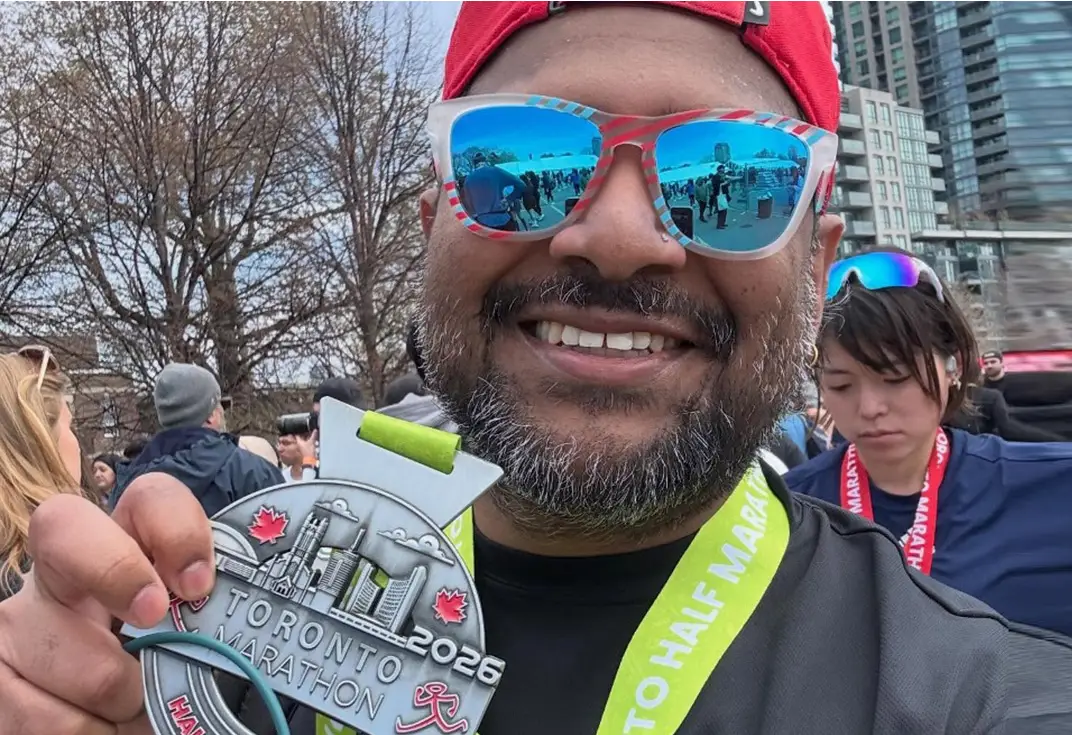
Growing up in a family from Trinidad and Tobago, Ryan Mohamed saw diabetes affect generation after generation, even the youngest members of his family.
I’ve known diabetes my whole life,” he says.
His grandmother, mother, father and sister live with type 2 diabetes. At family gatherings, around a table filled with Trinidadian cuisine, someone was always checking or talking about their blood glucose levels as they prepared to enjoy their curry chicken, pholourie, buss up shot roti, and other favourites.
But knowing about diabetes and confronting his own diabetes risk were two different things.
Ryan’s starting line with diabetes
Years ago, a blood test showed that Ryan’s A1C result was within the range of prediabetes; his blood glucose levels were higher than normal, but not yet in the range of type 2 diabetes.
His family doctor encouraged Ryan to make lifestyle changes, including following healthy eating guidelines and getting the recommended amount of physical exercise each week, but Ryan admits that, at first, he largely ignored the warning.
Several years later, Ryan underwent a sleep test upon a referral from his family doctor. His results led to a diagnosis of sleep apnea, a medical condition that causes a person to repeatedly stop and start breathing throughout the night. In a one-night test, he had 138 recorded incidences of his breathing stopping, which explained some of the symptoms he was having, including exhaustion even after a full night’s sleep.
Discovering his sleep apnea, one of several risk factors for type 2 diabetes, Ryan was motivated to get back on track with his A1C testing. When he got his results, this time his blood glucose levels were in the range for type 2 diabetes. His thoughts immediately went to his family:
I just started thinking about my mom, my family.
Ryan had seen firsthand what diabetes complications could mean, particularly since his grandmother had experienced diabetic peripheral neuropathy, a long-term complication resulting in nerve damage and, in her case, an amputation.
Suddenly, those experiences with diabetes no longer felt like something happening around him; they became a reason to think seriously about his own future.
Ryan makes small changes
Ryan was inspired to make changes, but he started small. Two thousand steps became 5,000 before he knew it, and gradually increased to 7,000 steps. Eventually, Ryan reached 10,000 steps a day and wondered what else he could do. “I saw a 5K run happening in my area and so, I signed up for that,” he says.
A few 5K runs led to a 10K run, then a half-marathon race. Before long, Ryan was crossing marathon finish lines in Toronto, New York, Chicago and even soon he will run in London.
Running became much more than exercise. It gave him a community, mental clarity and a growing sense of what his body was capable of. It also made him think differently about representation.
At races and run clubs, Ryan didn’t always see many people who looked like him, and so he started draping the Trinidad and Tobago flag around his shoulders at finish lines to highlight his heritage.
There needs to be more people like me at the starting line,” he says.
He believes that more culturally appropriate education and tools are needed in the diabetes community to help people make those first steps.
Family meals and cultural celebrations always included those living with diabetes. But when it came to diabetes education, he didn’t always find the information that spoke about his own community.
Familiar foods and tastes and textures can be hard to replace, because food is much more than just a personal preference, it speaks to where we come from, who we are and how we relate to one another.
We need more voices and more people talking about diabetes who look like us, sound like us, and understand our communities,” Ryan says.
In October 2026, he will run the Toronto Waterfront Marathon in support of Diabetes Canada, raising awareness about a condition that has shaped his family for generations and helping others see what is possible after a diagnosis.
Ryan embodies what it means to be resilient. He took a diagnosis that could have felt overwhelming and turned it into motivation to care for his health, challenge himself and inspire others. By sharing his story so openly, Ryan is helping people see that diabetes does not define what they are capable of. His courage, determination and commitment to raising awareness will make a lasting impact on our community.
Ryan may be crossing marathon finish lines today, but his journey began the same way many others do: with one small step forward. For him, every kilometre is about more than fitness. It's about showing others that a diabetes diagnosis does not have to define what comes next. Whether it's booking a doctor's appointment, taking a walk around the block or learning more about diabetes, meaningful progress often begins with a single decision.
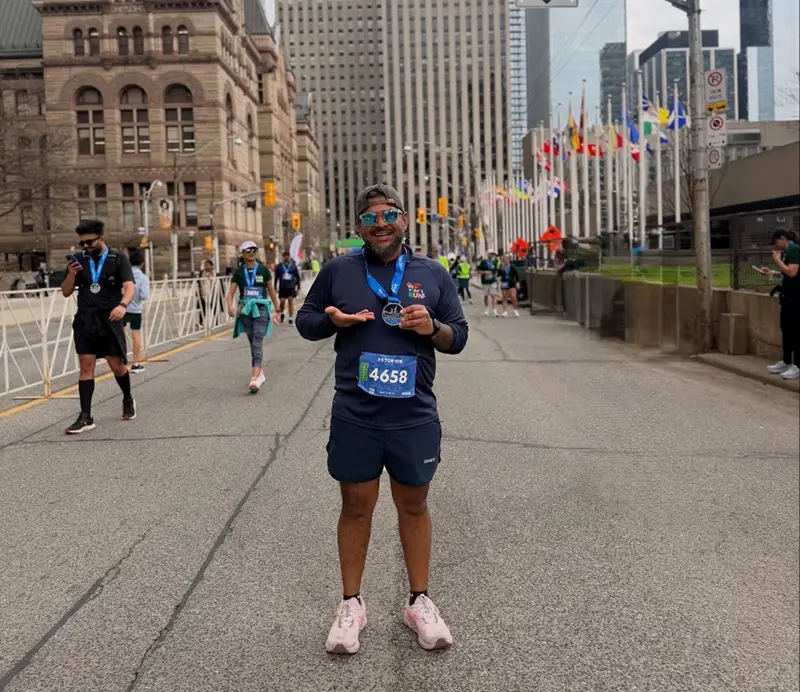
Ryan may be crossing marathon finish lines today, but his journey began the same way many others do: with one small step forward. For him, every kilometre is about more than fitness. It's about showing others that a diabetes diagnosis does not have to define what comes next. Whether it's booking a doctor's appointment, taking a walk around the block or learning more about diabetes, meaningful progress often begins with a single decision.
You just really got to take the first step,” he says. “And that first step will look different for everyone because progress isn't linear.